

Why choose a bottom air conditioner for an RV?
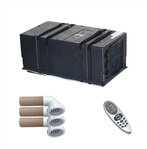
As an important part of RV temperature control, air conditioners have many types to choose from, but users often ignore the pros and cons of different types when purchasing. Today, I will take you to learn about the kind of air conditioner many domestic and foreign manufacturers choose bottom air conditioners.


Since solar panels need to be arranged on the top of the RV, if a roof-mounted air conditioner is used, it will occupy a certain area, which has a huge impact on the layout of solar panels, which are "every inch of land is valuable". At the same time, the high heat dissipation of the roof-mounted air conditioner will greatly reduce the power generation efficiency of the solar panels. In the design of RVs, RV manufacturers will focus more on providing RVs with suitable refrigeration equipment to meet the RV's electricity needs.
In areas with sufficient sunlight, there are many sunny days and sufficient sunlight. RVs equipped with solar panels can provide an energy guarantee for outdoor travel, especially when there is a lack of camp supplies, solar panels can be used to replenish electricity. Installing one more solar panel brings more insurance.
After the top of the RV is covered with solar panels, you need to choose a more suitable type of air conditioner. Among them, the bottom air conditioner of the RV is the most mature form of RV cooling/heating. The bottom air conditioner also has unique advantages in the actual use of the RV:
1. Low center of gravity, stable driving
The bottom-mounted air conditioner can concentrate its weight on the bottom of the RV. Compared with the side-mounted and top-mounted air conditioners, the bottom-mounted air conditioner is fixed on the chassis of the RV, which lowers the center of gravity of the vehicle body and makes the center of gravity of the RV more stable. Especially during driving, it completely avoids excess wind resistance.

2. The air outlet layout of the bottom-mounted air conditioner is more flexible
The air outlet of the bottom-mounted air conditioner is led out by the air duct, so the RV can freely arrange the position of the cold air outlet during the design process, which can avoid the RV cooling/heat dead corner caused by the limitation of the wind direction of the top and side-mounted air outlets. Reasonable air outlet layout can make the temperature control of the RV "twice the result with half the effort".

3. The bottom-mounted air conditioner is relatively easier to install
Unlike the household split air conditioner, the Truma bottom-mounted air conditioner is an integrated design of the internal and external units. There is no need to install refrigerant pipelines. It only needs to provide ventilation ports for the external circulation and plug-in and use. Compared with split air conditioners, there is no concern about refrigerant leakage in the connecting pipes of the internal and external units.

4. The bottom-mounted air conditioner has a gentler air outlet

Because the air outlet of the bottom-mounted air conditioner is not blown directly by the traditional grille outlet, after passing through the air duct, the air outlet will achieve a gentle cooling effect, rather than relying directly on "direct blowing of cold air" to achieve the purpose of cooling, so that users can experience a comfortable and healthy cool environment.
5. Quiet operation and easier noise reduction
Because the installation position of the bottom-mounted air conditioner is more flexible, it can be built into the cabinet. The wooden cabinet material has a noise-reduction effect. If the sound-absorbing material is included, the operation is quieter. Let the entire RV use the texture to the fullest.

6. Lightweight and low energy consumption
In the early stage of RV design, if only the roof load-bearing capacity of the solar panel is considered, the design plan is easier to optimize and reduce costs. The weight of the bottom-mounted air conditioner is much lower than that of other types of air conditioners, which can reduce the weight of the vehicle and increase the load-bearing capacity, and the starting current is low, and the operation power consumption is low, so the power supply can be self-sufficient through solar power supply.