


What is new energy vehicle battery thermal management?
The battery thermal management system of new energy vehicles is designed to adjust the battery temperature, reduce the difference between the highest and lowest temperatures in the battery pack, and keep the power battery in a suitable working temperature range, thereby ensuring the charging and discharging performance, battery safety and life, and reducing the risk of spontaneous combustion of new energy vehicles due to battery overheating.
According to the different cooling media, the battery thermal management system of new energy vehicles can be mainly divided into three categories: air cooling, liquid cooling and direct cooling. Among them, liquid cooling is the mainstream technology for power battery cooling. It has fast cooling speed, large specific heat capacity, high heat transfer coefficient, and good performance in heat transfer capacity and heat transfer consistency. The components of the liquid cooling system are relatively complex, mainly including battery coolers, electronic expansion valves, electronic water pumps, battery valves, liquid cooling pipes, liquid cooling plates, etc. Among them, liquid cooling pipes and liquid cooling plates transfer excess heat through the circulation of coolant in the liquid flow to achieve cooling function, which is the key component of the liquid cooling system.
As new energy vehicles gradually develop towards high energy density and long driving range, the demand for temperature monitoring and control in power battery thermal management systems is increasing. In order to achieve better cooling effects, in the future, liquid cooling tubes and liquid cooling plates will gradually improve technical requirements and quality according to customer needs. While the process difficulty increases, the value and usage of each vehicle are expected to increase significantly. In addition, with the increase in demand in the downstream new energy vehicle industry, specific categories and models of downstream new energy vehicle battery thermal management systems are expected to achieve scale effects in production, and the industry chain has great growth potential.
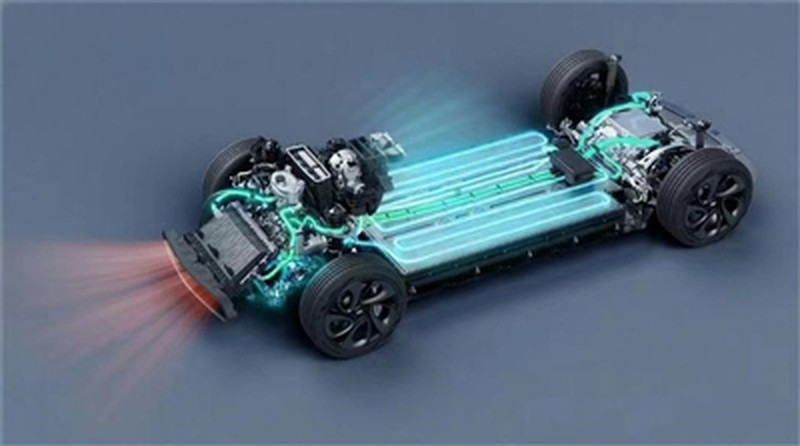
Liquid cooling tubes and liquid cooling plates are a form of cooling that indirectly transfers the heat of the heating device to the cooling liquid enclosed in the circulation pipeline through a closed cavity composed of metal pipes and plates (usually heat-conducting metals such as copper and aluminum), and takes away the heat through the cooling liquid. Since this cooling method will greatly affect the overall safety, weight, working stability and other aspects of the power battery, it has high technical barriers, which are mainly reflected in the following points:
First, the heat dissipation effect is required to be high. Since new energy vehicle batteries generate a lot of heat when working, excessive heat will not only affect the working efficiency of the battery, but also cause certain safety risks. Therefore, liquid cooling tubes and liquid cooling plates have high requirements for heat dissipation power, and need to be able to promptly export the excess heat generated during the operation of the power battery to avoid excessive temperature rise;
Second, the sealing reliability is required to be high. The working environment of road vehicles is complex, with vibration, impact, high and low temperature alternation and other environments. At the same time, the design life of liquid cooling plates and liquid cooling tubes must cover the service life of the entire vehicle; the power battery voltage is often hundreds of volts. If there is a problem with the sealing of the liquid cooling plate and liquid cooling tube, resulting in internal coolant leakage, it will cause a short circuit in the battery, and spontaneous combustion will occur when the temperature accumulates to a certain level;
Third, the heat dissipation design requires high precision. Due to the different models of new energy vehicles, the battery shapes and arrangement combinations they use are different. It is necessary to finely design the coolant flow channels of the liquid cooling tubes and liquid cooling plates of different battery packs so that the coolant can evenly cool the battery temperature and avoid excessive temperature differences at different positions in the battery pack;
Fourth, the lightweight requirements are high. In order to reduce the weight of the vehicle body and increase the mileage of electric vehicles, the materials used in the liquid cooling tubes and liquid cooling plates are lighter and thinner. The thinning of the materials further increases the difficulty of technical processing;
In addition, liquid cooling tubes and liquid cooling plates should undergo relevant tests before leaving the factory and meet relevant national and industry standards and design requirements, including tests and verifications in appearance quality, performance, water quality, environmental adaptability, working methods, etc. Therefore, suppliers of liquid cooling tubes and liquid cooling plates need to master core R&D and process technologies and continuously innovate in product performance.


