


Thermal Management Technology For EV Cars
The thermal management system (TMS) of an automobile is an important part of the vehicle system. The development purposes of the thermal management system are mainly safety, comfort, energy saving, economy and durability.
Automobile thermal management is to coordinate the matching, optimization and control of the vehicle engine, air conditioner, battery, motor and other related components and subsystems from the perspective of the whole vehicle, effectively solve the thermal problems of the whole vehicle, make each functional module in the best temperature range, improve the economy and power of the whole vehicle, and ensure the safe driving of the vehicle.
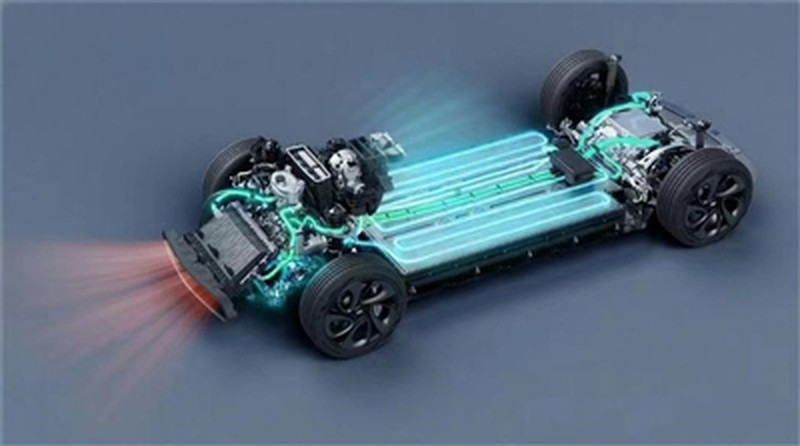
The thermal management system of new energy vehicles is derived from the thermal management system of traditional fuel vehicles. It has common parts of the thermal management system of traditional fuel vehicles, such as engine cooling system, air conditioning system, etc., and has additional cooling systems for new parts such as battery, motor and electronic control. The use of three electrics to replace the engine and gearbox is the main change in the thermal management system compared to traditional fuel vehicles. In addition, there may be electric compressors to replace ordinary compressors, and new components such as battery cooling plates, battery coolers, PTC heaters or heat pumps.
Thermal management general components:
In the thermal management system of the car, it is roughly composed of electronic water pump, electromagnetic valve, compressor, PTC heater, electronic fan, expansion kettle, evaporator and condenser.
Electronic water pump: It is a mechanical device for conveying liquid or pressurizing liquid. It transfers the mechanical energy of the prime mover or other external energy to the liquid, increases the energy of the liquid, and conveys the liquid. The operating principle is to judge according to the current state of the power or other components, and control the flow rate by controlling the flow through the water pump. According to different flow rates, heat can be taken away to keep the temperature stable.
Solenoid valve: That is, an electronically controlled valve, which has two-way and three-way valves. The refrigerant flowing out of the condenser outlet is in a high-temperature and high-pressure liquid state. In order to reduce the saturation temperature of the liquid refrigerant, its pressure needs to be reduced. At the same time, in order to make the flow rate within a suitable range, before the refrigerant enters the evaporator, it needs to be throttled by controlling the valve opening.
Compressor: The low-pressure and low-temperature refrigerant gas is pushed and compressed to do work on the gaseous refrigerant, so that it can produce changes in pressure and temperature, thereby becoming a high-temperature and high-pressure gaseous refrigerant.
Condenser: Cools the high-temperature refrigerant. After the refrigerant is discharged from the compressor, it is in a high-temperature and high-pressure state. At this time, it needs to be cooled and the process of changing the refrigerant from gas to liquid is completed.
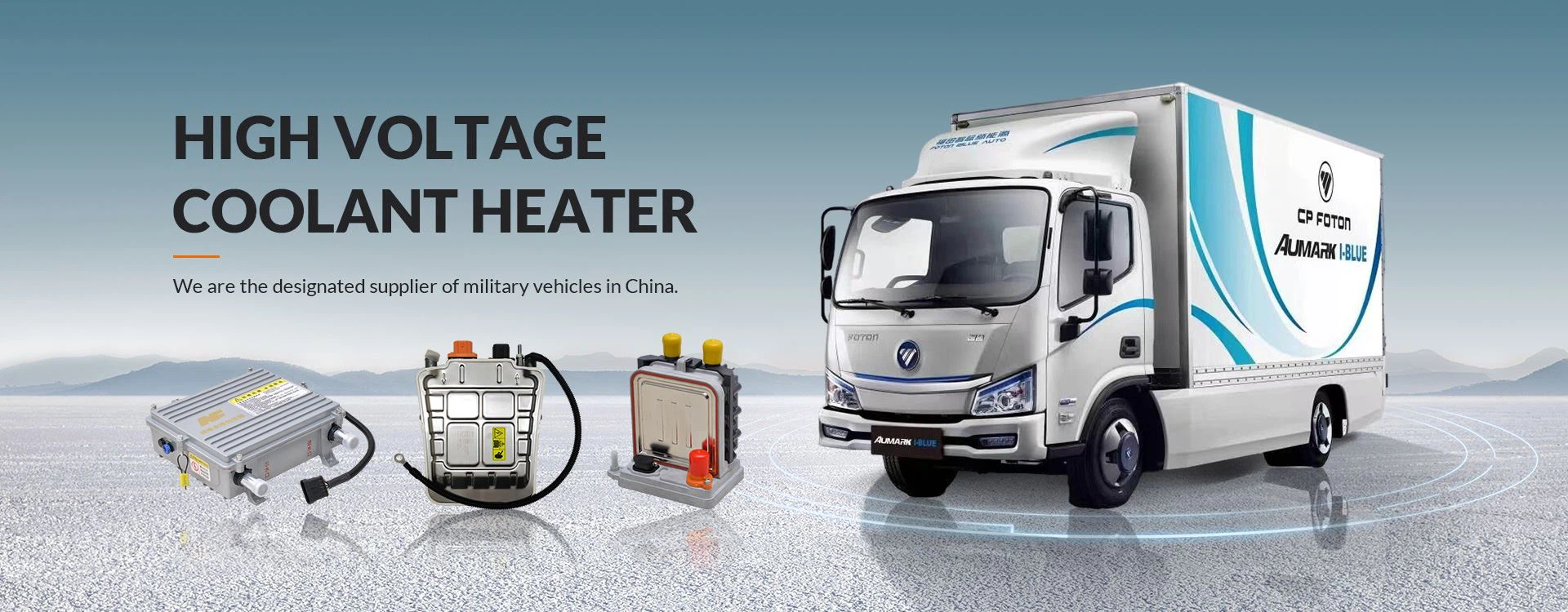
PTC heater: It is a resistive heating device, usually with a rated working voltage between 350v-550v. When the PTC electric heater is powered on, the initial resistance is low, and the heating power is large at this time. After the temperature of the PTC heater rises above the Curie temperature, the resistance of the PTC increases sharply to generate heat, and the heat is transported to the components through the water medium in the water pump.
Heating system: In the heating system, if it is a hybrid vehicle or a fuel cell system vehicle, the heat generated during the operation of the engine or fuel cell system itself can be used to meet the heat demand. The fuel cell system may need a PTC heater to assist in heating under low temperature conditions so that the system can quickly heat up; if it is a pure power battery vehicle, a PTC heater may be needed to meet the heat demand.
Refrigeration system: If it is a heat dissipation system, it is necessary to drive the heat dissipation liquid in the components to flow through the operation of the water pump to take away the local heat, and use a fan to assist in rapid heat dissipation.
Air conditioning refrigeration system: In principle, the heat transfer effect is achieved through the special properties of the refrigerant (common refrigerants include R134-tetrafluoroethane, R12 difluorodichloromethane, etc.), by utilizing the absorption and release of heat accompanying its evaporation and condensation. The seemingly simple heat transfer process actually includes the complex phase change process of the refrigerant, in order to achieve the change of the refrigerant state and make it carry heat repeatedly. The air conditioning system is mainly composed of four major parts: compressor, condenser, evaporator, and expansion valve. In the structure of the air conditioning refrigeration cycle system, the refrigerant comes out of the compressor and passes through the condenser, expansion valve, evaporator, and then returns to the compressor to complete a refrigeration cycle.
Evaporator: The working principle of the evaporator is exactly the opposite of the condenser. It absorbs heat from the air and transfers the heat to the refrigeration, so that it can complete the gasification process. After the refrigerant is throttled by the throttling device, it is in a state of coexistence of vapor and liquid, also known as wet steam. After the wet steam enters the evaporator, it begins to absorb heat and evaporates into saturated steam. If the refrigerant continues to absorb heat, it will become superheated steam.
Electronic fan: The only component that can actively supply air to improve the heat exchange performance of the radiator. Currently, most vehicles use axial-flow cooling fans, which have the advantages of high efficiency, small size and easy layout, and are usually arranged behind the radiator.


