

The structure and working principle of the
battery thermal management system
Whether it is winter or summer, the normal operating temperature of the battery is 25 ℃±5 ℃. In winter, it needs to be heated by the battery thermal management equipment, and the target water temperature for heating is 25 ℃±5 ℃; in summer, it needs to be cooled by the battery thermal management equipment, and the target water temperature for cooling is also 25 ℃±5 ℃. The following introduces three types of liquid-cooled (heated) battery thermal management systems commonly used in buses. These three types of battery thermal management are all integrated heating and cooling systems. According to the use and ambient temperature requirements of pure electric buses, when the system needs to be cooled, the antifreeze is directly cooled by the heat exchanger of the battery thermal management system; when the system needs to be heated, the PTC electric liquid heater connected in series in the battery thermal management water circulation system heats the antifreeze.

Simple unit form
The simple unit includes a plate heat exchanger, a water pump, a fan, and a PTC electric liquid heater. Its principle is shown in Figure 1 and its composition is shown in Figure 1.

1- Plate heat exchanger; 2, 5- Solenoid valve; 3, 4- Water temperature sensor; 6- PTC; 7- Fan; 8- Controller; 9- Water pump
When the simple unit system receives the cooling signal, solenoid valve 2 opens, solenoid valve 5 closes, and the fan and water pump start working, extracting cold air from the air conditioning duct through the duct, and the cold air completes heat exchange with the antifreeze in the system through the plate heat exchanger in the unit, and then the antifreeze is sent to the heat exchanger inside the battery through the water pump, so as to achieve the purpose of lowering the battery temperature. When the heating signal is received, solenoid valve 2 closes, solenoid valve 5 opens, and the PTC electric liquid heater and water pump inside the unit start working to heat the antifreeze in the system. The same as the principle of refrigeration cycle, the heat exchange between the antifreeze and the heat exchange plate inside the battery is used to achieve the purpose of heating the battery.
In addition to heating and cooling, water-cooled units generally also have a self-circulation function, mainly to solve the problem of excessive temperature difference inside the battery. After receiving the self-circulation instruction from the BMS, the PTC electric liquid heater and the fan stop working, the water pump operates normally, the antifreeze channel opens, and the water circuit self-circulates to avoid excessive temperature differences inside the battery.
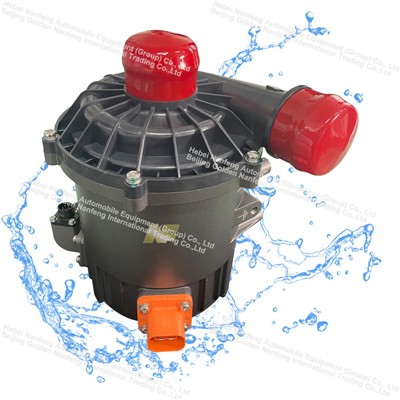
The simple unit has a simple structure and a relatively low price. However, due to the lack of an independent refrigeration system, cold air needs to be drawn from the compartment to reduce the antifreeze temperature, resulting in a small cooling capacity. In addition, the simple unit is also affected by the working state of the air-conditioning system, and its use has limitations.
The simple unit has poor cooling capacity and small cooling power (generally less than 2 kW), and is suitable for hybrid buses using slow-charging batteries with low battery charge and discharge rates.