The structure and working principle of the battery
thermal management system
Non-independent unit form
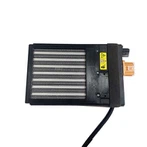
Figure 3 is a typical non-independent unit battery thermal management system composition diagram. Among them: evaporator 1 is the evaporator of the air conditioning system, which is used to cool the cabin air; evaporator 2 is the evaporator of the water cooling unit, where the cooling water and the refrigerant complete heat exchange, and the battery is cooled by lowering the temperature of the antifreeze. The two evaporator assemblies are in parallel, and the two share a set of compressors, condensers, drying bottles and other components. The circulation of the two refrigerants is controlled by solenoid valves 1 and 2 respectively, and the flow of the two refrigerants is adjusted by expansion valves 1 and 2 respectively. When the battery needs to be heated, solenoid valve 2 is closed, the water pump and PTC electric liquid heater start working, and the antifreeze is heated by PTC and sent to the internal heat exchanger of the battery to heat the battery. In the self-circulation mode, solenoid valve 2 is closed, the PTC electric liquid heater stops working, the water pump runs, and the water circuit runs in a self-circulating manner to avoid excessive temperature differences inside the battery.
Non-independent units do not require a separate refrigeration system, which can reduce the cost of thermal management equipment. However, since the non-independent unit needs to divert part of the refrigerant from the air-conditioning system, it will inevitably have a certain impact on the cooling effect of the passenger area, and also increase the load of the air-conditioning system; in addition, the long high and low pressure pipelines of the air-conditioning from the air-conditioning system to the battery water-cooling unit are not conducive to improving the energy efficiency ratio of the air-conditioning system; finally, the condenser and evaporator assembly of the bus air-conditioning are generally arranged on the roof, which limits the installation position of the battery thermal management equipment. For example, when the battery is placed at the bottom, it is difficult to connect the high and low-voltage pipelines between the battery water-cooling unit and the air-conditioning system.
In fact, for bus companies, the air-conditioning manufacturer and model of each model are not fixed, which makes it difficult to match the water-cooling unit and the air-conditioning, which is also an important factor limiting the use of non-independent units. In addition, the cooling power of the non-independent unit is relatively large, and it is generally suitable for occasions above 6 kW. Since the bus equipped with the battery thermal management system of the non-independent unit conflicts with the cooling demand of the whole vehicle, the control logic is relatively complex, which is suitable for pure electric buses with fast-charging batteries with high battery charging and discharging rates.