


Control of Electric Vehicle Air Conditioning System
The electric vehicle VCU collects the air-conditioning A/C switch signal, air-conditioning pressure switch signal, evaporator temperature signal, wind speed signal, and ambient temperature signal. It forms a control signal through calculation processing and transmits it to the air-conditioning controller through the CAN bus. The air-conditioning controller controls the disconnection and connection of the compressor high-voltage circuit.
Pure electric vehicle air conditioning and heating system:
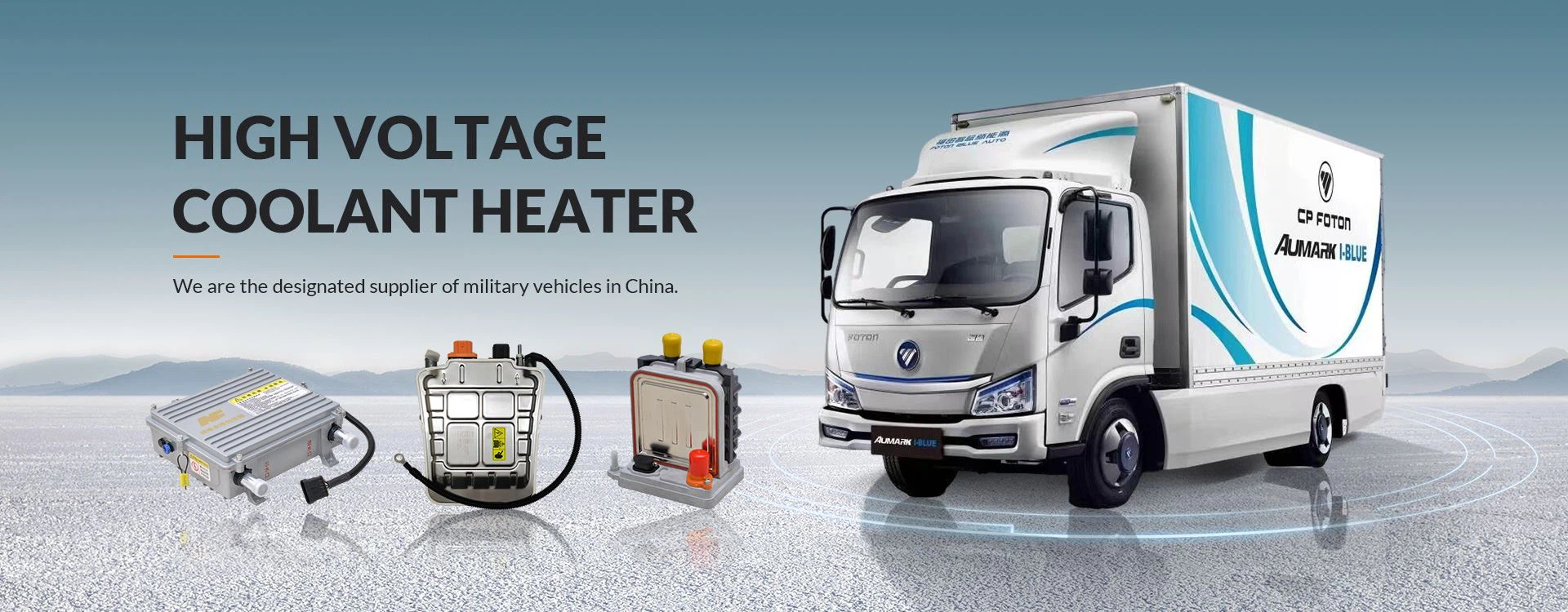
Because pure electric vehicles use motors to drive the vehicle, they do not have gasoline engines with high heat generation, and cannot use the heat generated by themselves to provide warm air for passengers in the car like traditional fuel vehicles. Since the engine will keep the temperature within a certain controllable range under the regulation of the cooling system when it is running normally, using it as a heat source can make the heating amount controllable. However, if pure electric vehicles want to provide controllable heating effects through other means, the heating source must be at a constant temperature first. Then there is the most commonly used heating element called PTC in electric vehicles.


A PTC electric heater is a heater that uses PTC thermistor elements as a heat source. From the appearance, it is somewhat similar to the heat sink in the air conditioning system of traditional fuel vehicles, but it is equipped with a ceramic thermistor inside, which is bonded to the corrugated heat dissipation aluminum strip by high-temperature glue. The resistance value of the thermistor changes sharply with temperature changes. When the temperature rises, the PTC resistance value increases, and the heat generation will gradually decrease. As the resistance value continues to increase and the temperature continues to rise, its resistance becomes infinite until it is close to insulation, which is equivalent to automatically cutting off the power supply after reaching a certain high temperature, so that the temperature drops and the temperature is stabilized at around the set temperature (generally 240 degrees Celsius) through such a reciprocating cycle. In this way, the air conditioning and heating function of electric vehicles is realized by using PTC electric heaters. But it also consumes the battery power of electric vehicles and reduces the mileage of new energy vehicles.
In addition, some electric vehicles also use a "cold and hot dual-purpose" air-conditioning system with a two-way expansion valve. As the name suggests, a "cold and hot dual-purpose" air-conditioning system means that a system can realize the two functions of cooling and heating respectively. This air-conditioning system is modified based on being equipped with an electric compressor, and the structure is the same. The ability of the electric compressor to operate in both forward and reverse directions is the key to realizing the "cold and hot dual-purpose" air-conditioning system.


